

Rotary vs. Planar Molybdenum Targets: Which One Is Right for Your Process?
When it comes to magnetron sputtering, the choice of target configuration is far more than a technical footnote—it's a strategic decision that directly impacts your material costs, production uptime, and film quality. For molybdenum targets, which are essential in semiconductor manufacturing, solar cells, and flat panel displays, understanding the trade-offs between planar and rotary designs is critical.
Here's a comprehensive breakdown to help you decide which one fits your process.
What's the Difference?
Planar targets are flat, stationary plates of source material mounted parallel to the substrate. They're the traditional workhorse of sputtering systems, simple in design and widely available. Think of them as the "tried and true" option.
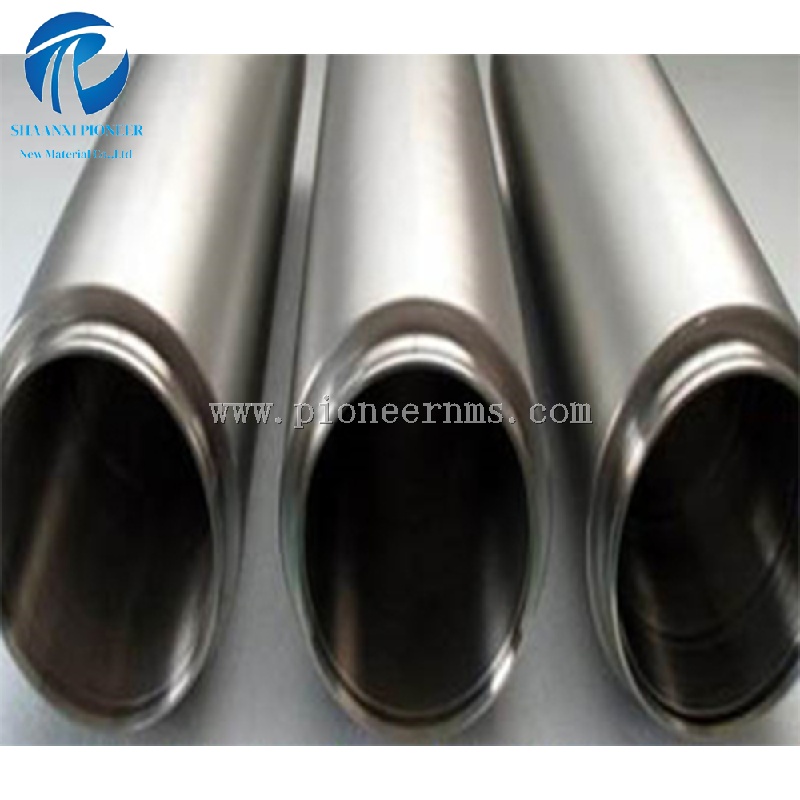
Rotary targets (also called cylindrical or rotatable targets) are tubular in shape and rotate during sputtering. This continuous motion is the key innovation—it transforms how the material erodes and how the process performs.
The Numbers That Matter: Utilization Rate
This is the single biggest difference between the two.
Why such a gap? In planar targets, the plasma concentrates in a ring-shaped "racetrack" groove. Once that groove is depleted, the target must be replaced—even though most of the material remains unused. With rotary targets, the rotation ensures the entire cylindrical surface erodes evenly, making use of up to 90% of the material.
For high-value molybdenum (purity often exceeding 99.97%), this difference translates directly into significant cost savings.
Key Advantages of Rotary Targets
1. Longer Lifespan and Higher Uptime
Because erosion is uniform, rotary targets last significantly longer than planar ones. Fewer target changes mean less system downtime and higher overall productivity. In high-volume production lines, this is a game-changer.
2. Superior Film Uniformity
The rotating motion naturally creates a more evenly distributed flux of sputtered material, producing consistent film thickness over large areas. Some manufacturers even offer proprietary magnetic field tuning technologies to achieve non-uniformity as low as ±0.3% over the coating width.
3. Higher Power and Faster Deposition
Rotary targets manage heat better. Their cylindrical shape provides a larger surface area for cooling, allowing them to handle much higher power densities without overheating. This translates to faster deposition rates and shorter cycle times.
4. Fewer Defects
Better thermal management reduces nodule formation and arcing—common problems that can ruin film quality and force process interruptions.
When Planar Targets Still Make Sense
Despite rotary targets' clear advantages, planar targets aren't obsolete.
Planar targets are still the better choice when:
-
You're doing prototype work or R&D with small material volumes
-
Your production scale is small and the higher upfront cost of rotary systems isn't justified
-
You're working with materials that aren't available in rotatable form (though molybdenum is widely available in both configurations)
They're simpler to manufacture, easier to mount, and have a lower initial cost. For lab-scale experiments or low-volume production, that simplicity still has value.
The Molybdenum-Specific Factor
For molybdenum targets in particular, there's an additional consideration: monolithic rotary targets.
Some manufacturers now offer monolithic rotary targets made of 100% molybdenum with no backing tube. This design eliminates the bonding layer (typically indium, which melts at only 156°C) and allows for even higher sputtering power—up to 30kW/m. The result is higher deposition rates and improved thin-film properties, making monolithic molybdenum rotary targets especially attractive for CIGS solar cell production and TFT-LCD manufacturing.
Side-by-Side Comparison
| Feature | Planar Target | Rotary Target |
|---|---|---|
| Material Utilization | 30–40% | 70–90% |
| Target Lifespan | Shorter | Significantly longer |
| Production Uptime | Lower (frequent changes) | Higher (fewer interruptions) |
| Film Uniformity | Prone to variation | Superior and consistent |
| Power Handling | Limited | High |
| Thermal Management | Concentrated heat | Evenly distributed |
| Upfront Cost | Lower | Higher |
| Best For | R&D, small-scale production | High-volume, continuous industrial coating |
Which One Should You Choose?
The answer depends on your priorities:
-
If you're running high-volume production and material cost matters—choose rotary. The higher upfront investment will pay for itself through reduced waste, longer runtime, and better uptime.
-
If you're in R&D, prototyping, or small-batch work—stick with planar. It's simpler, cheaper upfront, and good enough for non-production environments.
For molybdenum users in industries like semiconductors, solar, and display manufacturing, the trend is clear: rotary targets are becoming the standard for high-efficiency, continuous production.
Looking for high-quality molybdenum targets? Whether you need planar, rotary, or monolithic designs, we can help you find the right fit for your process. [Contact us for a quote.]
Post time:Sep-25-2020


