

What Makes a High-Quality Molybdenum Target?
Molybdenum sputtering targets are essential materials in modern semiconductor manufacturing, flat panel display production, and thin-film solar cell fabrication. As a leading supplier of refractory metals, Shaanxi Pioneer New Material Co., Ltd. understands that target quality directly impacts thin-film performance and production yield. This article explores the key factors that define a premium-grade molybdenum target.
1. Ultra-High Purity
Purity is the most critical quality indicator for molybdenum targets. Metal and gaseous impurities in the target are transferred almost 1:1 to the sputtered functional layer, affecting electrical conductivity and causing particle formation (arcing effect) during the PVD process.
Industry standards for high-quality targets:
Leading manufacturers guarantee extremely low impurity levels, with oxygen content as low as 6 ppm—far below industry averages. For applications in semiconductor chip manufacturing and high-end displays, targets with Fe and Ni content below 50 ppm and oxygen below 200 ppm are essential.
2. Maximum Density
Target density directly affects sputtering efficiency and film quality. High-density molybdenum targets enable faster deposition rates and better electrical conductivity of the created layers.
Key density specifications:
Denser targets provide higher sputtering speeds, improved process efficiency, and superior film conductivity. Manufacturers achieve near-theoretical density through advanced powder metallurgy techniques, including hot rolling and specialized forming processes.
3. Homogeneous Microstructure
The microstructure of a molybdenum target—particularly grain size and orientation—determines sputtering rate consistency and film uniformity.
Microstructure requirements:
-
Texture control: Consistent grain orientation ensures constant sputtering rates and homogeneous layer thickness
-
Defect-free: No internal cracks, porosity, or inclusions detectable by ultrasonic inspection
Targets with uniform microstructure provide stable sputtering rates throughout the target's lifetime, reducing process variability and improving production yield.
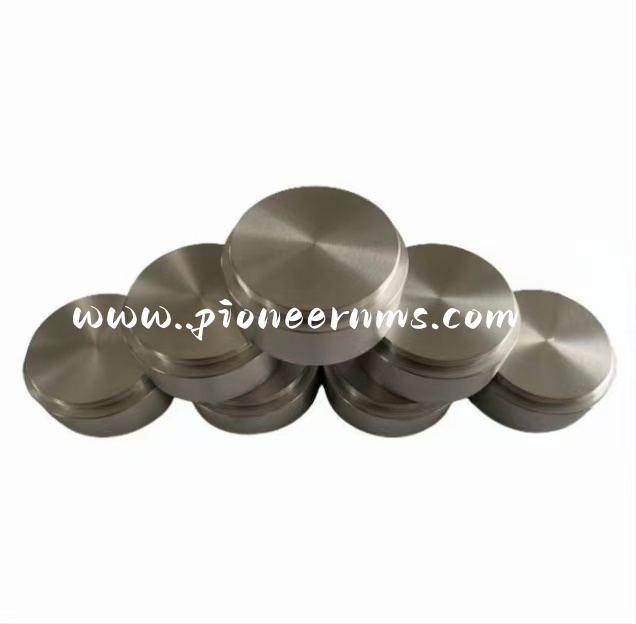
4. Precision Dimensional Specifications
High-quality molybdenum targets must meet exacting dimensional tolerances to ensure compatibility with modern sputtering equipment and optimal coating uniformity.
Key dimensional criteria:
High-flatness targets minimize arcing and particle generation, leading to more stable deposition processes and improved thin-film quality.
5. Application-Specific Performance
Different industries require different levels of target performance, and leading manufacturers tailor their products accordingly:
6. Target Format and Design Options
Premium suppliers offer multiple target formats to suit different coating systems and production requirements:
Planar Targets:
-
Multi-part sets for larger applications
-
Bonded options for semiconductor industry (up to 450mm diameter)
Rotary Targets:
-
75% material utilization rate
-
Monolithic rotary targets without backing tubes for extreme power densities (up to 30 kW/m)
Why Molybdenum Target Quality Matters
Molybdenum targets are vital across multiple high-tech industries:
-
Display Manufacturing: Molybdenum layers control individual pixels in TFT-LCD and OLED screens
-
Semiconductor: Used in gate electrodes, interconnects, and barrier layers for advanced chips
-
Solar Energy: Essential back contact material in CIGS thin-film solar cells
-
Medical Equipment: Used in X-ray tubes for mammography and diagnostic imaging
With the global molybdenum target market projected to grow at a CAGR of 7.1-8.3% through 2031, driven by increasing semiconductor production and renewable energy adoption, the demand for high-quality targets continues to rise.
Conclusion
A high-quality molybdenum target is defined by exceptional purity (≥99.97%), near-theoretical density (≥99.5%), homogeneous microstructure, precise dimensional specifications, and application-optimized design. These factors collectively ensure consistent sputtering rates, superior film quality, and extended target lifetime.
At Shaanxi Pioneer New Material Co., Ltd., we supply premium-grade molybdenum targets that meet these exacting standards. Our products feature high purity (>99.95%), fine grain structure, and precision machining for seamless integration with leading sputtering systems. We offer both planar and rotary targets, available in custom dimensions to match your specific coating requirements.
Contact us today to discuss your molybdenum target specifications. Our technical team can help you select the optimal grade, purity, and format for your application.
Post time:Sep-25-2020


