

In industries that demand extreme heat resistance and structural stability, molybdenum alloys have become essential materials. From vacuum furnaces to semiconductor manufacturing and powder metallurgy, these advanced metals deliver exceptional performance where conventional materials fail.
But what exactly is a molybdenum alloy, and why is it so widely used in high-temperature applications?
What Is a Molybdenum Alloy?
A molybdenum alloy is a material based on pure molybdenum (Mo), enhanced by adding small amounts of other elements such as titanium (Ti), zirconium (Zr), lanthanum oxide (La₂O₃), or rhenium (Re).
These alloying elements significantly improve the physical and mechanical properties of molybdenum, making it more suitable for demanding environments.
In simple terms:
Molybdenum alloys are engineered to be stronger, more stable, and more durable than pure molybdenum.
Why Use Molybdenum Alloys Instead of Pure Molybdenum?
While pure molybdenum already offers:
- A very high melting point (~2620°C)
- Excellent thermal conductivity
- Low thermal expansion
It also has limitations:
- Brittleness at room temperature
- Reduced strength at extreme temperatures
- Limited resistance to recrystallization
By forming alloys, these weaknesses are significantly reduced, resulting in:
✔ Improved high-temperature strength
✔ Better creep resistance
✔ Enhanced structural stability
✔ Longer service life in harsh environments
Common Types of Molybdenum Alloys
1. TZM Alloy (Mo-Ti-Zr-C)
TZM alloy is one of the most widely used molybdenum alloys in industrial applications.
Key Features:
- Excellent high-temperature strength
- Superior creep resistance
- Good weldability and machinability
Typical Applications:
- Vacuum furnace components
- Molybdenum boats and fixtures
- Heat treatment systems
2. MoLa Alloy (Molybdenum-Lanthanum Oxide)
MoLa alloy is doped with lanthanum oxide (La₂O₃), which enhances the material’s microstructure.
Key Features:
- Outstanding recrystallization resistance
- Improved high-temperature stability
- Strong anti-deformation performance
Core advantage:
Maintains shape and strength even after long-term exposure to high temperatures
Typical Applications:
- Furnace heating elements
- Structural supports in high-temperature systems
- Semiconductor and electronics industries
3. Mo-Re Alloy (Molybdenum-Rhenium)
Mo-Re alloy is designed for applications requiring both strength and ductility.
Key Features:
- High ductility (less brittle)
- Excellent thermal shock resistance
- Reliable performance under extreme conditions
Typical Applications:
- Aerospace components
- Advanced electronics
- High-stress environments
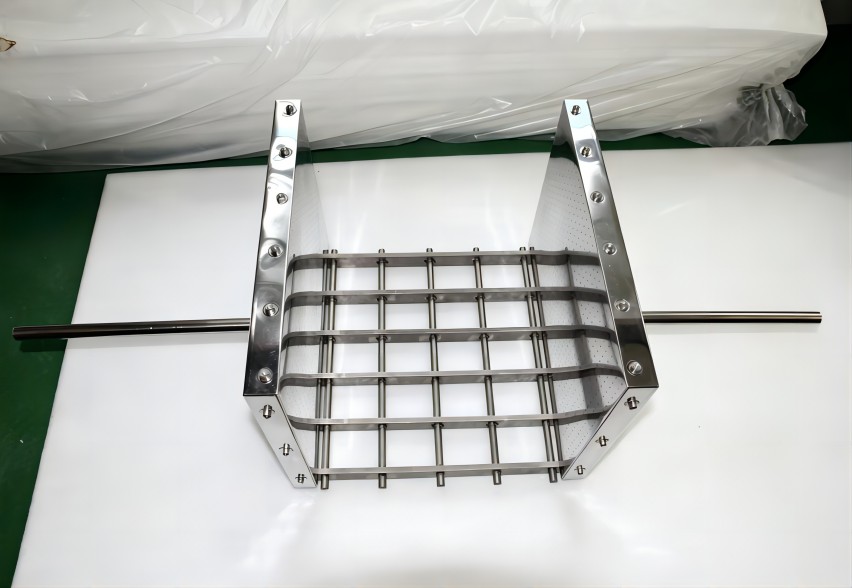
4. Pure Molybdenum (Base Material)
Although not an alloy, pure molybdenum is widely used as the foundation for many products:
Key Properties of Molybdenum Alloys
Molybdenum alloys are valued for their exceptional physical properties:
- Ultra-high melting point
- Excellent high-temperature strength
- Low thermal expansion (dimensional stability)
- Good thermal conductivity
- Corrosion resistance in vacuum or inert environments
Applications of Molybdenum Alloys
Thanks to these properties, molybdenum alloys are widely used in:
- Vacuum furnaces
- Powder metallurgy processes
- Semiconductor manufacturing
- Heat treatment industries
- Aerospace engineering
- Advanced materials processing
How to Choose the Right Molybdenum Alloy?
Each alloy is designed for specific performance needs:
- TZM → Best for high strength and heavy-duty applications
- MoLa → Ideal for long-term stability and anti-deformation
- Mo-Re → Suitable for ductility and extreme thermal conditions
Selecting the right alloy depends on temperature, load, environment, and service life requirements.
Conclusion
Molybdenum alloys are critical materials for modern high-temperature industries. By enhancing pure molybdenum with carefully selected elements, these alloys provide unmatched performance in extreme environments.
Whether you are working with vacuum furnace components, high-temperature sintering, or semiconductor processing, choosing the right molybdenum alloy can significantly improve efficiency, durability, and overall system reliability.
Post time:Sep-25-2020


