

From Molybdenum Powder to 0.5 mm Molybdenum Sheet: The Complete Powder Metallurgy and Rolling Process
A molybdenum sheet only 0.5 mm thick can withstand temperatures above 2600°C. This unique combination of thinness, strength, and extreme heat resistance makes it an indispensable material in aerospace, semiconductor manufacturing, photovoltaic thermal fields, and vacuum furnace applications.
Behind this high-performance material lies a highly controlled manufacturing process that begins with molybdenum trioxide powder and ends with a precision-rolled sheet. The journey involves powder reduction, compaction, sintering, rolling, annealing, and finishing—each step playing a critical role in determining the final properties of the material.
Powder Metallurgy: Turning Molybdenum Powder into a Dense Billet
Unlike many conventional metals that are produced through casting, molybdenum sheets are typically manufactured using powder metallurgy. This process minimizes chemical segregation, improves material utilization, and delivers more uniform and reliable material properties.
1. Production of High-Purity Molybdenum Powder
The process begins with high-purity molybdenum trioxide (MoO₃), which is converted into metallic molybdenum powder through a two-stage hydrogen reduction process.
Powder particle size is a key factor throughout the manufacturing process. Research has shown that particle size significantly affects reduction behavior, sintering performance, rolling characteristics, and the mechanical properties of the finished sheet. Coarser powders generally exhibit better dispersion, lower agglomeration, and a narrower particle-size distribution, which can be advantageous during subsequent processing stages.
2. Compaction and Sintering
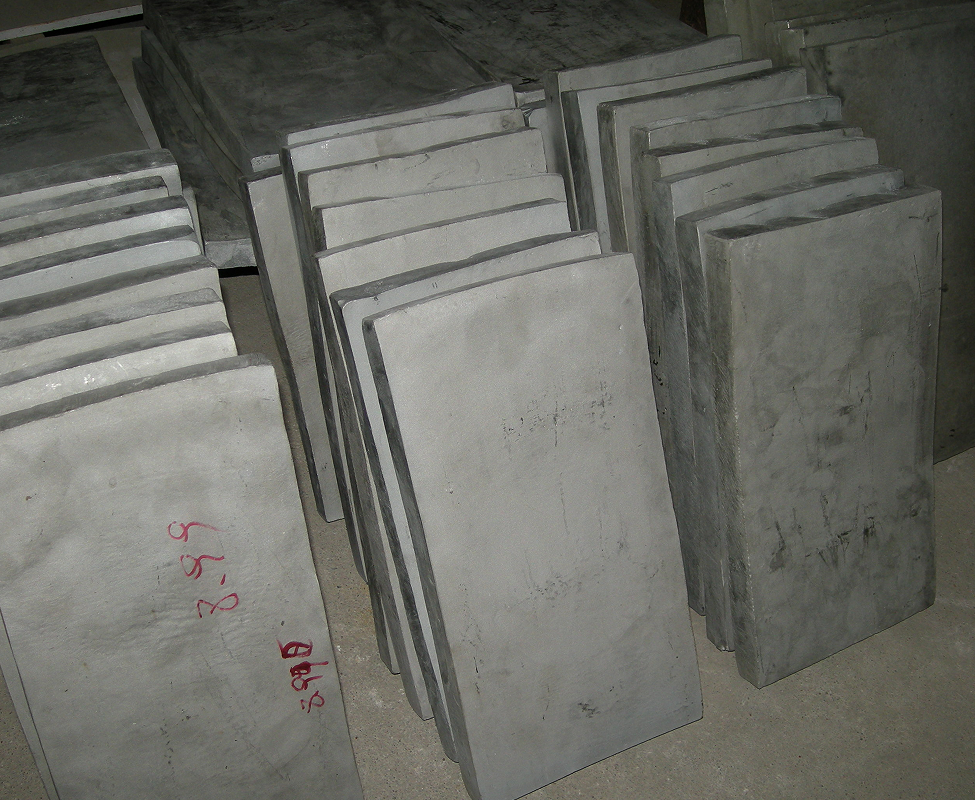
After reduction, the molybdenum powder is compacted into billets using a pressing process. These billets are then sintered in a hydrogen-protective atmosphere through a two-stage sintering cycle.
During pre-sintering, the billet gains sufficient strength for handling and further processing. High-temperature sintering then promotes atomic diffusion, significantly increasing density and structural integrity. The resulting sintered billet typically achieves a relative density of more than 95%, making it suitable for rolling operations.
Rolling Process: From Sintered Billet to 0.5 mm Sheet
Once a dense billet has been produced, the deformation process begins.
Molybdenum has a body-centered cubic (BCC) crystal structure and is relatively brittle at room temperature. Its high ductile-to-brittle transition temperature makes deformation processing particularly challenging. To overcome these limitations, rolling is carried out in multiple stages.
Hot Rolling
The first stage is hot rolling, which is performed above the recrystallization temperature of molybdenum. At elevated temperatures, the material exhibits improved plasticity and lower deformation resistance, allowing substantial thickness reduction without cracking.
Hot rolling transforms the sintered billet into a workable plate while refining its internal microstructure.
Cold Rolling and Intermediate Annealing
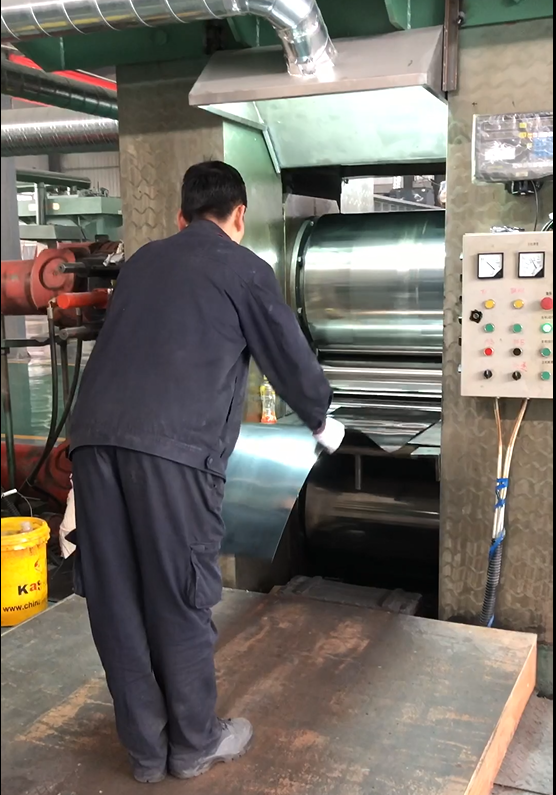
Following hot rolling, the plate undergoes multiple cold-rolling passes to gradually reach the target thickness.
As deformation accumulates during cold rolling, work hardening increases the material's strength but reduces its ductility. To prevent cracking and maintain formability, intermediate annealing treatments are performed between rolling passes. These heat treatments relieve internal stresses, restore ductility, and prepare the material for further thickness reduction.
Through a carefully controlled sequence of rolling and annealing, the plate can eventually be reduced to a thickness of 0.5 mm or even thinner.
Key Factors Affecting Molybdenum Sheet Quality
Producing a thin molybdenum sheet is only part of the challenge. Achieving consistent mechanical properties, dimensional stability, and high-temperature performance requires precise control of several critical factors.
Powder Particle Size Optimization
Powder particle size presents a classic trade-off in molybdenum processing.
Studies have shown that billets produced from coarser molybdenum oxide powders often exhibit superior sintering behavior and overall processability. However, very thin molybdenum sheets manufactured from finer powders may demonstrate improved mechanical properties after rolling and annealing.
This apparent contradiction highlights the complex relationship between particle morphology, agglomeration, reduction efficiency, sintering behavior, and microstructural evolution during deformation.
Rolling Direction and Mechanical Properties
The rolling method also has a significant influence on the final performance of molybdenum sheets.
Compared with conventional unidirectional rolling, cross-rolling can effectively reduce anisotropy and improve the balance of mechanical properties in different directions. As operating temperatures increase, however, recrystallization and grain growth tend to reduce the differences between sheets produced by different rolling routes.
Impurity Control
Impurity control is another critical aspect of molybdenum sheet manufacturing.
Interstitial elements such as oxygen, carbon, and nitrogen can reduce grain-boundary cohesion and restrict dislocation movement. As a result, excessive impurity levels increase brittleness and raise the ductile-to-brittle transition temperature.
Maintaining strict control over impurity content is essential not only for improving processability but also for ensuring long-term performance and service life in demanding applications.
Modern Manufacturing: From Trial-and-Error to Simulation
Traditionally, optimization of molybdenum rolling processes relied heavily on production experience and repeated testing.
Today, finite element analysis (FEA) is increasingly being used to optimize manufacturing parameters before production begins. Engineers can simulate temperature distribution, stress and strain evolution, material flow behavior, and rolling force requirements throughout the deformation process.
These simulations help identify potential defects, improve process stability, and shorten development cycles. As a result, molybdenum sheet manufacturing is gradually shifting from experience-based production to data-driven precision control.
Applications of Thin Molybdenum Sheets
Thanks to their excellent high-temperature strength, thermal conductivity, dimensional stability, and vacuum compatibility, thin molybdenum sheets are widely used in:
- Vacuum furnace hot zones
- Semiconductor manufacturing equipment
- Sapphire crystal growth systems
- Photovoltaic thermal field components
- Aerospace heat shields
- High-temperature furnace components
- Electronic and sputtering target applications
Conclusion
The production of a 0.5 mm molybdenum sheet involves a series of carefully controlled processes, including powder reduction, compaction, sintering, hot rolling, cold rolling, annealing, and final finishing.
Each stage plays a vital role in determining the sheet's density, microstructure, mechanical properties, and high-temperature performance. By precisely controlling every step—from powder characteristics to rolling parameters—manufacturers can produce molybdenum sheets capable of meeting the demanding requirements of semiconductor equipment, vacuum furnaces, aerospace systems, and other extreme-temperature applications.
As manufacturing technologies continue to advance, the combination of powder metallurgy, precision rolling, and simulation-based process optimization will further improve the quality, consistency, and performance of molybdenum sheet products used in the world's most challenging environments.
Post time:Sep-25-2020


