

How to Choose the Right Molybdenum Sputtering Target: A Practical Guide for Engineers and Buyers
Selecting the right molybdenum sputtering target is about more than simply matching dimensions. The target's purity, manufacturing quality, and compatibility with your sputtering system all have a direct impact on deposition efficiency, coating quality, equipment uptime, and overall production cost.
Whether you are sourcing targets for semiconductor manufacturing, optical coatings, solar cells, or other PVD applications, understanding the key selection criteria will help you make a more informed decision.
1. Understand Your Application Requirements
Before choosing a sputtering target, identify the requirements of your coating process.
Ask yourself:
- What material will be deposited?
- Is your system DC, RF, or magnetron sputtering?
- What film quality is required?
- Is the process running continuously or intermittently?
- What deposition rate is expected?
Applications such as semiconductor manufacturing and precision optical coatings generally require higher-purity molybdenum and tighter quality control.
2. Select the Right Target Design
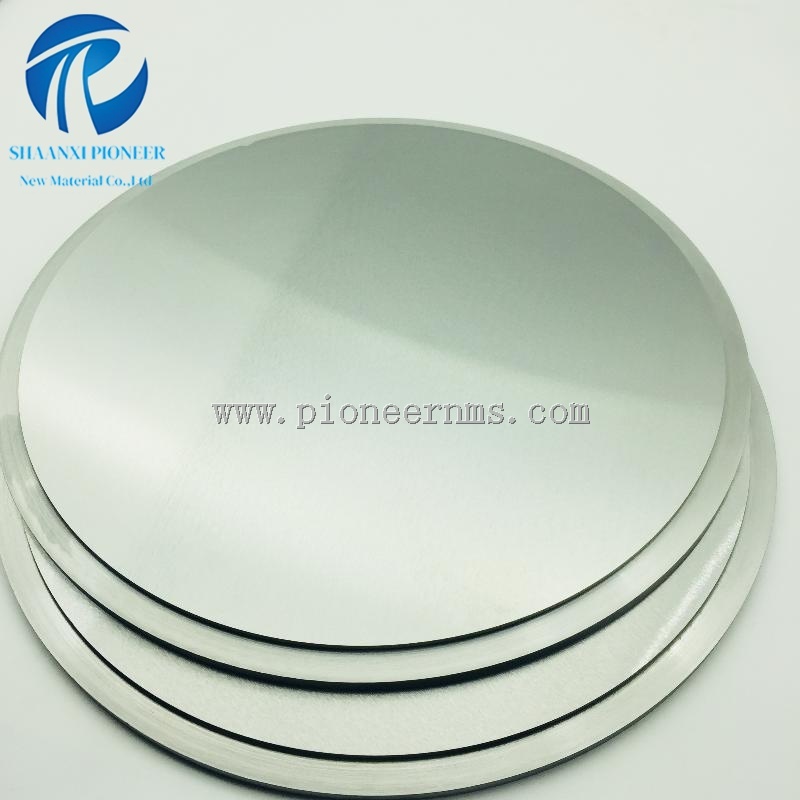
One of the first decisions is whether a planar molybdenum target or a rotary molybdenum target is better suited to your equipment.
Planar Molybdenum Targets
Planar targets are commonly used in standard sputtering systems and offer several advantages:
- Lower initial investment
- Easy installation and replacement
- Suitable for low- to medium-volume production
- Wide availability in standard dimensions
Rotary Molybdenum Targets
Rotary targets are designed for high-volume production lines where efficiency and equipment uptime are critical.
Advantages include:
- Higher target utilization
- Longer service life
- More uniform erosion
- Less production downtime
- Lower operating cost over time
Not sure which design is best for your application?
Read our related article: Rotary vs. Planar Molybdenum Targets: Which One Is Right for Your Process? to learn more about the differences, advantages, and ideal applications of each target type.
3. Pay Attention to Material Purity
Purity plays a crucial role in sputtering performance.
Typical purity grades include:
| Purity | Typical Applications |
|---|---|
| 99.9% | General industrial coatings |
| 99.95% | Standard PVD and semiconductor applications |
| 99.99% | High-end electronics, optical coatings, and research |
Higher-purity molybdenum minimizes contamination, improves film consistency, and helps reduce particle generation during sputtering.
4. Evaluate Manufacturing Quality
Target quality depends on much more than purity.
When selecting a supplier, consider whether they can consistently control:
- Density
- Grain size
- Microstructure
- Chemical composition
- Internal defects
- Dimensional accuracy
Uniform grain structure contributes to stable sputtering performance and reduces the risk of cracking or uneven erosion.
Professional manufacturers typically perform chemical analysis, density testing, ultrasonic inspection, and dimensional verification before delivery.
5. Confirm Dimensions and Bonding Requirements
Even a high-quality target may not perform properly if it does not match your equipment.
Before ordering, verify:
- Diameter
- Length
- Thickness
- Backing plate material
- Bonding method
- Cooling design
- Mounting requirements
Many sputtering systems require customized targets rather than standard sizes.
6. Consider the Total Cost of Ownership
Choosing a target based only on purchase price may increase long-term production costs.
A premium-quality molybdenum target can provide:
- Longer operating life
- Higher deposition efficiency
- Lower maintenance costs
- Fewer target replacements
- Better coating consistency
- Reduced equipment downtime
Evaluating the total cost of ownership (TCO) often reveals that higher-quality targets deliver greater value over time.
7. Choose an Experienced Manufacturer
Working with an experienced manufacturer helps ensure both product quality and technical support.
Look for a supplier that offers:
- High-purity molybdenum materials
- Planar and rotary targets
- Custom dimensions and geometries
- Precision machining
- Strict quality control
- Fast technical support
- Stable lead times
An experienced supplier can also recommend the most suitable target based on your equipment and coating process.
Conclusion
Selecting the right molybdenum sputtering target requires evaluating more than just dimensions or price. Purity, target design, manufacturing quality, equipment compatibility, and long-term operating costs all play important roles in achieving stable sputtering performance.
Whether you choose a planar or rotary molybdenum target, partnering with a reliable manufacturer can improve coating quality, extend target life, and reduce overall production costs.
we specializes in manufacturing high-purity molybdenum sputtering targets for PVD and vacuum coating applications. We supply both standard and custom planar and rotary targets with precision machining, strict quality control, and fast delivery to meet the needs of customers worldwide.
Looking for the right molybdenum sputtering target for your application? Contact our team today to discuss your requirements or request a quotation.
Post time:Sep-25-2020


