

Physical Vapor Deposition sounds like heavy rocket science, but the core concept is remarkably straightforward. Think of it as atomic-scale spray painting inside a vacuum. Instead of liquid paint, high-tech equipment vaporizes solid metal—such as a high-purity molybdenum sputtering target—and deposits it atom-by-atom onto a surface to create an ultra-thin, highly durable film.
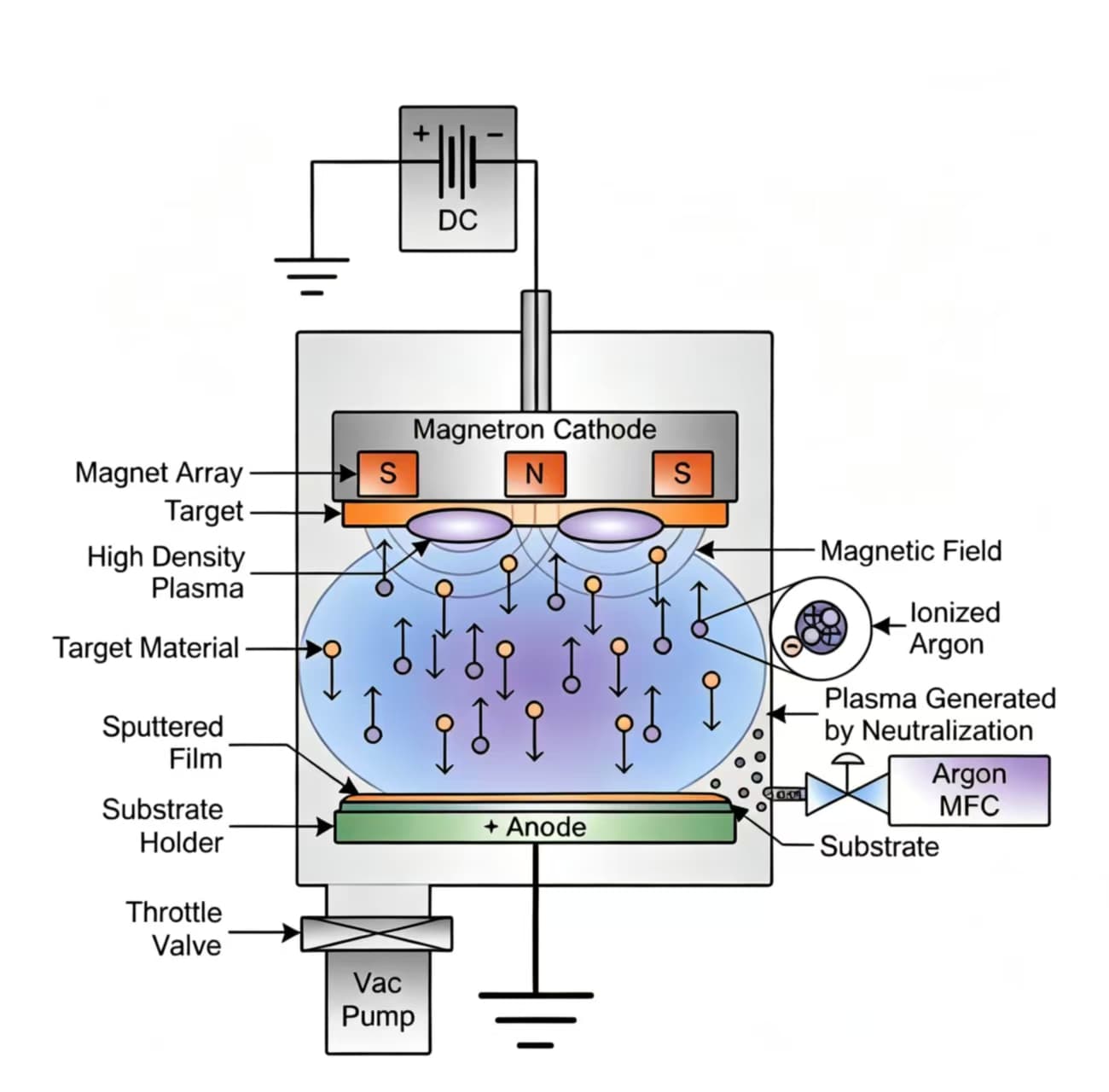
How PVD Works: The Atomic Billiards Analogy
To understand PVD, picture a game of microscopic billiards taking place inside a sealed, airless chamber:
Step 1: Vaporization (Hitting the Rack)
In the most popular PVD method—magnetron sputtering—positively charged argon plasma ions act like fast-moving cue balls. They smash into the source material, whether it’s a planar molybdenum target or a high-efficiency rotary molybdenum target. The kinetic energy knocks molybdenum atoms loose into space.
Step 2: Transportation (Cruising Through the Vacuum)
Because the process happens in an ultra-clean vacuum, the freed molybdenum atoms travel across the chamber in a straight, uninterrupted line without hitting air molecules or picking up contaminants.
Step 3: Deposition (Landing on the Target)
The atoms condense on the workpiece (the substrate), forming a perfectly smooth layer that can range from a few nanometers to several micrometers thick.
PVD vs. Old-School Electroplating: Why the Industry Shifted
For decades, liquid chemical baths (electroplating) were the standard way to coat metal. Today, high-tech manufacturing relies almost exclusively on PVD vacuum deposition.
Atomic Precision: PVD builds coatings layer by single layer. This gives manufacturers pin-point control over optical and electrical properties in sensitive devices like TFT-LCD displays and microchips.
Flawless Adhesion: Atoms hit the surface with high kinetic energy, forming a ultra-tight bond that won't flake, peel, or blister under thermal stress.
Zero Chemical Waste: Unlike electroplating, which produces toxic heavy-metal sludge, PVD is a dry, eco-friendly physical process with no hazardous liquid runoff.
Why Target Material Quality Makes or Breaks the Coating
Because the final coating is built directly from the source target, the rule is simple: garbage in, garbage out.
If a molybdenum sputtering target contains microscopic air pockets, impurities, or inconsistent grain structures, the argon plasma will cause localized electrical sparks—a phenomenon known as arcing. Arcing spews microscopic debris onto the workpiece, causing electrical short circuits in microelectronics or defects in solar panels.
That is why advanced manufacturers demand targets with 99.95% Mo purity, a high density exceeding 98%, and an equiaxed grain structure. High-grade source materials ensure a smooth, stable sputtering process and deliver flawless coating performance every single time.
One of the most widely used PVD methods is sputtering, which uses a solid target material as the source for the deposited film. To understand the specific role of molybdenum in this process, see our article “Molybdenum Sputtering Target in PVD: What Is Its Role?”
Post time:Sep-25-2020


