

Before looking at the role of the sputtering target, it is helpful to understand the basic concept of PVD and how physical vapor deposition works. If you are new to PVD, you can first read our guide “What Is PVD? ”
When people talk about PVD coating, they often focus on the coating equipment, vacuum chamber, or the final thin film. But there is another essential component in the process: the sputtering target.
So, what exactly does a molybdenum sputtering target do in a PVD system?
The simplest answer is:
It provides the molybdenum material that will eventually become the molybdenum thin film on the substrate.
The Mo Target Is the Material Source
A molybdenum sputtering target is a solid piece of molybdenum installed inside a PVD sputtering system.
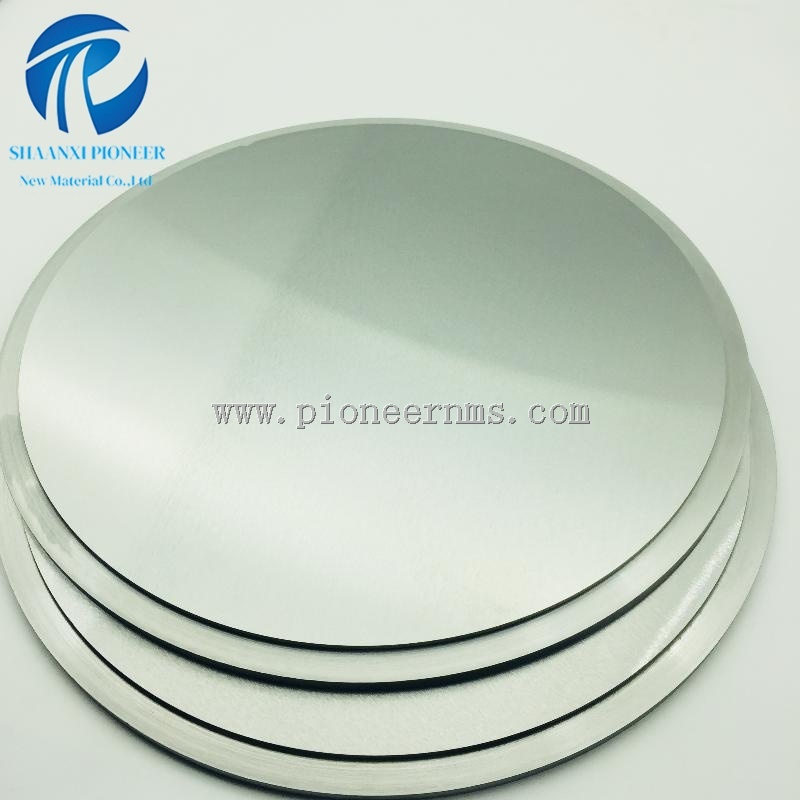
It is not the coating itself.
Instead, it acts as the source material for the coating process.
During sputtering, material is gradually removed from the target surface and transferred toward the substrate. The molybdenum atoms released from the target eventually deposit on the surface of the workpiece and form a thin Mo film.
The relationship can be simplified as:
Mo Target → Mo Atoms → Substrate → Mo Thin Film
In other words, the molybdenum target is where the material for the coating comes from.
From a Solid Target to a Thin Film
Imagine a PVD chamber containing a substrate that needs a thin molybdenum coating.
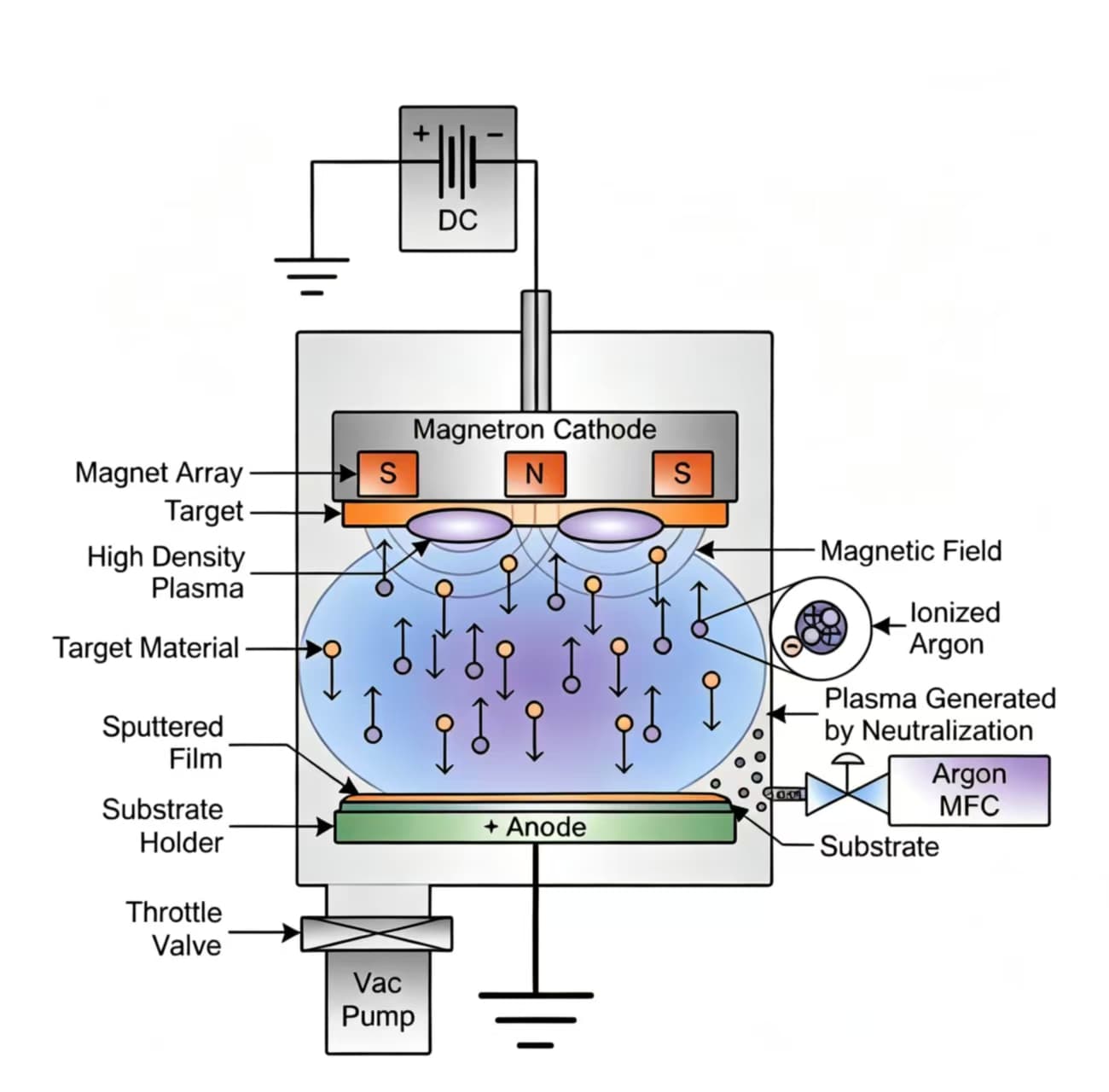
The molybdenum target is installed on the opposite side of the chamber as part of the sputtering system.
Once the sputtering process begins, the surface of the Mo target is continuously bombarded by energetic ions from the plasma.
These impacts cause molybdenum atoms to leave the target surface.
The released atoms then travel through the vacuum environment toward the substrate.
When they reach the substrate, they gradually accumulate and form a thin layer of molybdenum.
So although the target starts as a solid piece of metal, its material is ultimately transferred to another surface in the form of a very thin film.
This is why the target can be thought of as the material source of the PVD process.
The Target Is Part of a Larger System
It is also important to understand that the molybdenum target does not work independently.
Inside a PVD sputtering system, the target works together with components such as the cathode, plasma, vacuum system, substrate, and cooling system.
The target provides the material, while the sputtering system provides the conditions needed to release and transfer that material.
This can be visualized simply:
PVD System
→ Creates the sputtering environment
Mo Sputtering Target
→ Provides the molybdenum source material
Plasma
→ Enables the sputtering process
Substrate
→ Receives the molybdenum material
Final Result
→ Mo thin film
Each part has a different role, but the target is the starting point for the molybdenum material that ends up in the coating.
Target Material vs. Coating Material
One common misunderstanding is to treat the molybdenum target and the molybdenum coating as the same thing.
They are related, but they are not the same.
The Mo sputtering target is the source material.
The Mo thin film is the material deposited onto the substrate.
For example:
99.95% Mo sputtering target
↓
PVD sputtering process
↓
Molybdenum atoms
↓
Substrate
↓
Mo thin film
The target is gradually consumed as the coating is produced.
Why Is the Target So Important?
Because the target is the source of the material being deposited, its characteristics can directly influence the sputtering process and the resulting film.
The PVD system needs a target that can provide a stable and consistent supply of molybdenum during operation.
This is why industrial users do not simply look for “a piece of molybdenum.”
They usually specify a sputtering target according to their particular equipment and process requirements.
The target may need to match the PVD system in terms of material, dimensions, shape, and other technical specifications.
A Simple Way to Understand Its Role
If we compare PVD coating to painting, the sputtering target is somewhat like the source of the paint.
The equipment controls how the material is transferred, while the target provides the material that eventually forms the new surface.
Of course, PVD sputtering is a much more controlled physical process than painting, but the comparison helps explain the basic relationship:
The equipment controls the process.
The target provides the material.
The substrate receives the material.
For molybdenum PVD coatings, the Mo sputtering target is therefore the starting material that connects the PVD process to the final molybdenum thin film.
Conclusion
A molybdenum sputtering target has one fundamental role in PVD: to serve as the source of molybdenum for thin-film deposition.
It starts as a solid piece of molybdenum inside the PVD system. During sputtering, molybdenum atoms are released from its surface and eventually deposited onto the substrate, forming a thin Mo film.
Understanding this simple relationship is the first step toward understanding how molybdenum is used in PVD coating.
In the next part, we will look more closely at what actually happens to the Mo target during the sputtering process and how molybdenum atoms are transferred from the target to the substrate.
Post time:Sep-25-2020


