

In our previous article, we explained how the magnetron sputtering process works and how argon ions bombard a molybdenum sputtering target inside a PVD chamber.
When positively charged argon ions (Ar⁺) strike the target surface, some molybdenum (Mo) atoms gain enough energy to escape from the solid material. This process is known as sputtering.
But what happens after these atoms leave the target?
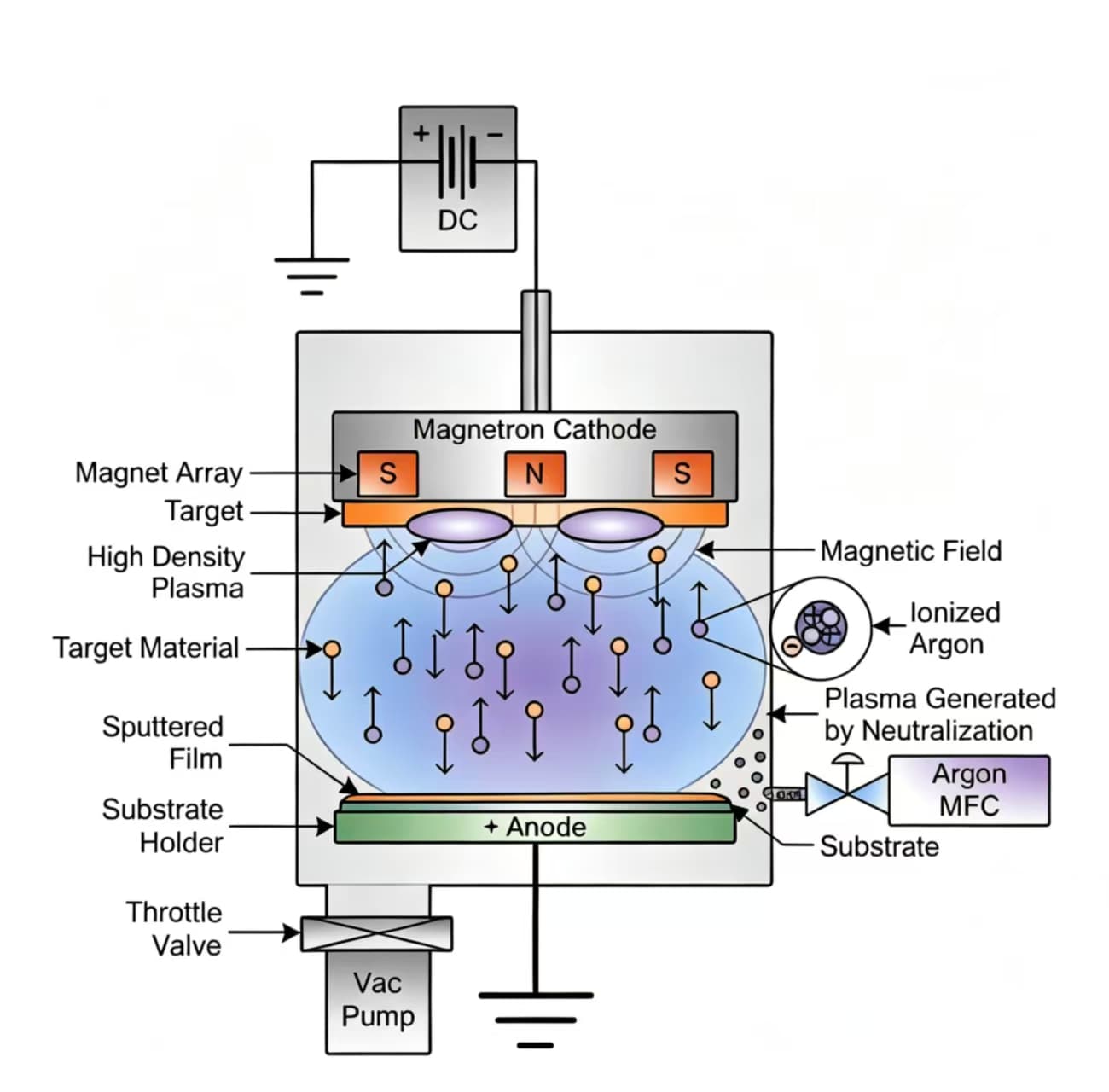
In physical vapor deposition (PVD), sputtered molybdenum atoms travel through the vacuum chamber and may eventually reach a substrate, where they contribute to the formation of a thin film.
Understanding this molybdenum thin film deposition process helps explain how a sputtering target supplies material for industrial coatings and why target specifications matter in PVD applications.
1. How Do Sputtered Molybdenum Atoms Travel Through a PVD Chamber?
After leaving the molybdenum sputtering target, Mo atoms enter the low-pressure environment inside the PVD vacuum chamber.
Because the chamber operates under vacuum, there are fewer gas particles than under atmospheric conditions. Many sputtered atoms can therefore travel toward the substrate without colliding with other particles.
However, not every molybdenum atom follows a direct path to the workpiece. Depending on the working pressure, target-to-substrate distance, and PVD system configuration, atoms may travel directly toward the substrate, collide with argon atoms, or reach other surfaces inside the chamber.
Only a portion of the sputtered material contributes to the coating on the intended substrate.
For industrial PVD coating applications, target positioning, substrate arrangement, and deposition conditions all influence material transport and deposition efficiency.
2. How Do Mo Atoms Reach the Substrate?
In a PVD coating process, the substrate is the surface on which the thin film is deposited. It may be a glass panel, an electronic component, or another industrial workpiece.
As sputtered molybdenum atoms reach the substrate, they can become adsorbed onto its surface. Depending on their energy and the substrate conditions, the atoms may move across the surface before joining other deposited atoms.
These atoms gradually form small clusters. As more material arrives, the clusters grow and merge, eventually forming a continuous film under suitable deposition conditions.
The process can be summarized as follows:
Molybdenum sputtering target → Argon plasma → Sputtered Mo atoms → Transport through the vacuum chamber → Substrate → Molybdenum thin film
This is the basic principle behind magnetron sputtering deposition, a widely used technique for producing thin films in industrial coating and electronics manufacturing.
3. How Does a Molybdenum Thin Film Form?
A molybdenum thin film does not form all at once. It develops progressively as sputtered atoms arrive at the substrate and become incorporated into the growing layer.
During the early stages of thin film deposition, separate atomic clusters may form on the substrate surface. As deposition continues, these clusters grow and may connect to create a more continuous coating.
The final film structure depends on several process parameters, including:
-
Working pressure: Influences the movement of sputtered atoms through the chamber.
-
Deposition rate: Affects how quickly the film grows.
-
Substrate temperature: Influences surface mobility and film development.
-
Surface preparation: Can affect film adhesion and the initial stages of film growth.
-
PVD system configuration: Influences material transport and coating uniformity.
These factors can affect the resulting film thickness, microstructure, adhesion, uniformity, and electrical properties.
For example, molybdenum is widely used as a back contact or back electrode in CIGS thin-film solar cells. In this application, the deposited Mo layer must meet the electrical and structural requirements of the solar-cell design.
This demonstrates that successful molybdenum thin film deposition depends not only on the target material but also on the complete deposition process.
4. Do All Sputtered Mo Atoms Become Part of the Coating?
No. Not every atom released from a molybdenum sputtering target reaches the intended substrate.
Some sputtered atoms contribute to thin film growth, while others strike chamber walls, shields, fixtures, or other internal components. Some may also collide with gas particles and change direction before reaching a surface.
The proportion of target material that contributes to the finished coating depends on the equipment design and operating conditions.
This is why target utilization and sputtering efficiency are important considerations in industrial PVD coating operations.
For coating manufacturers, the objective is not simply to release molybdenum atoms from the target. It is to achieve the required film thickness, uniformity, and performance in a stable and repeatable process.
5. Why Does Molybdenum Sputtering Target Quality Matter?
Understanding the journey from target to substrate helps explain why molybdenum sputtering target quality matters in thin film deposition.
Several material and manufacturing factors deserve attention.
Target purity
High-purity molybdenum targets help control the chemical composition of the deposited material. For applications with strict purity requirements, buyers should confirm the specified purity level and relevant impurity limits.
Density and internal structure
A dense target with a sound internal structure helps support stable sputtering operation. Porosity, inclusions, or other material defects may contribute to particle generation or abnormal discharge under certain operating conditions.
Microstructure
Grain size and distribution can influence sputtering behavior and erosion patterns. The appropriate microstructure depends on the target design and deposition application.
Dimensions and surface quality
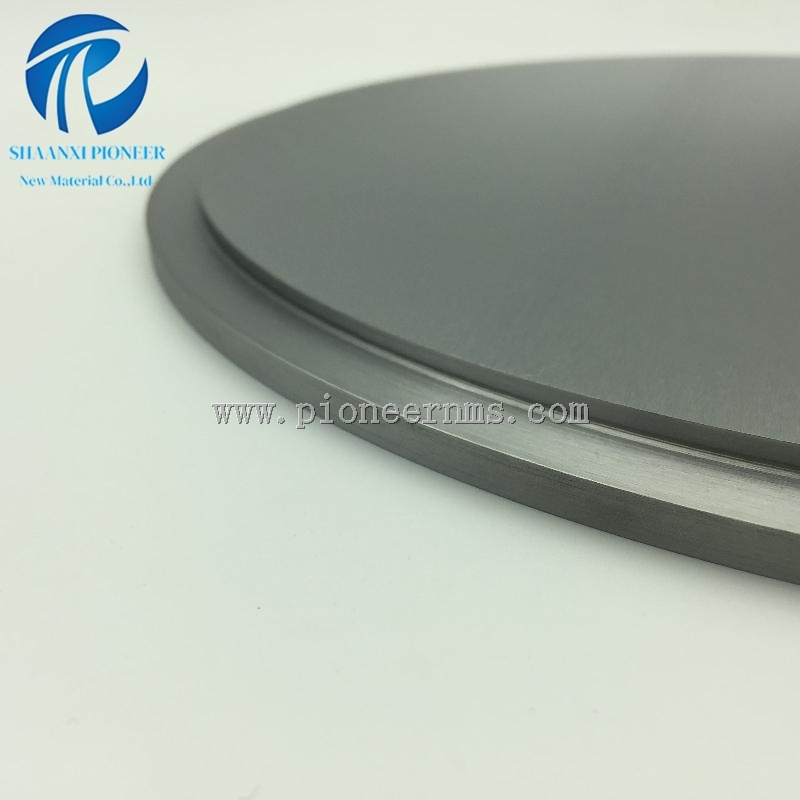
Target thickness, flatness, and dimensional tolerances must be compatible with the cathode assembly. For bonded sputtering targets, the bonding method and interface quality must also meet the equipment requirements.
For buyers sourcing molybdenum sputtering targets for PVD coating, material purity is only one part of the evaluation. Target geometry, manufacturing quality, and compatibility with the coating system also need to be considered.
Conclusion: From Molybdenum Sputtering Target to Thin Film
During the PVD sputtering process, molybdenum atoms are released from a solid target, travel through a vacuum chamber, and gradually form a thin film on a substrate.
The resulting coating depends on the target material, substrate characteristics, PVD equipment, and deposition parameters working together.
For manufacturers and procurement teams, understanding this process provides a useful starting point for evaluating molybdenum sputtering targets and communicating application requirements to suppliers.
At Pioneer New Materials, we supply molybdenum materials and customized sputtering targets based on customer specifications and manufacturing feasibility. If you are looking for Mo sputtering targets for an industrial PVD coating system, our team can review your required purity, dimensions, target design, and application requirements.
Next Article: Why Does PVD Require a Sputtering Target?
If sputtered molybdenum atoms are what ultimately form the thin film, why does a PVD system need a specially manufactured sputtering target instead of an ordinary piece of molybdenum?
In our next article, we will explain why sputtering targets require specific shapes, dimensions, material properties, and manufacturing standards—and how a purpose-made target differs from an ordinary piece of metal.
Post time:Sep-25-2020


