

When exploring physical vapor deposition (PVD), a foundational question always arises: What role does a molybdenum target actually play inside the chamber? In short, a Mo sputtering target acts as the essential source material for depositing a molybdenum coating.
To understand how a solid block of metal transforms into a functional film inside the vacuum, we can examine the step-by-step mechanics of the magnetron sputtering process.
Step 1: Preparing the PVD Chamber
The journey begins by loading the substrate—such as semiconductor components, solar cell layers, or glass—into the PVD chamber. The system is then evacuated to a high vacuum to remove atmospheric gases and prevent contamination.
Step 2: Installing the Molybdenum Target
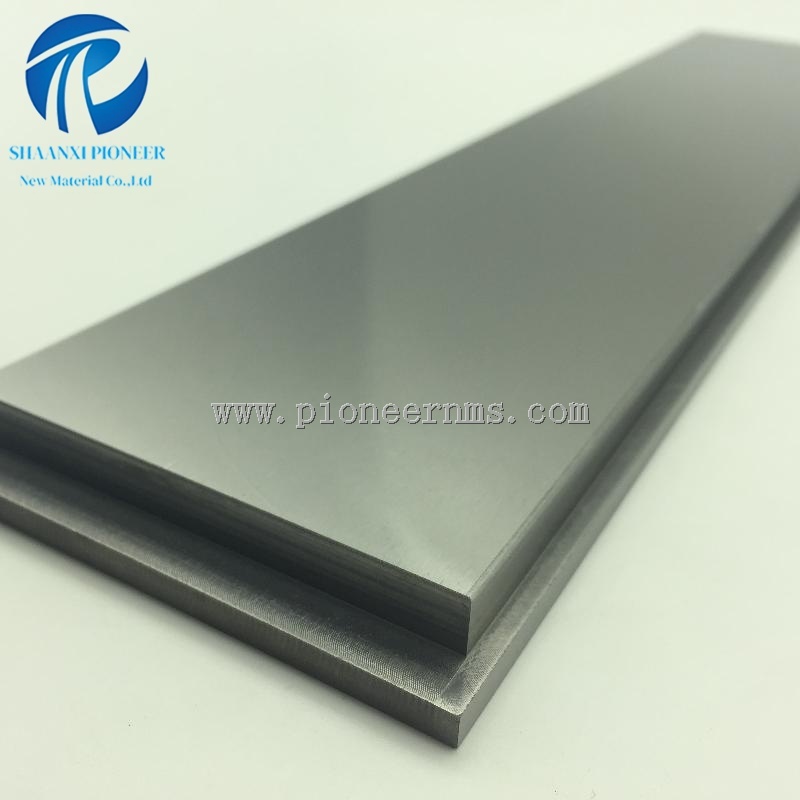
The molybdenum target is mounted onto the cathode assembly. For industrial production, targets integrate with:
-
Backing plates: Provide structural copper or stainless steel support.
-
Bonding layers: Ensure thermal and electrical conductivity.
-
Cooling systems: Manage intense thermal loads during operation.
Proper flatness, thickness consistency, and bonding are vital to prevent warping, poor thermal transfer, or cracking.
Step 3: Introducing the Working Gas
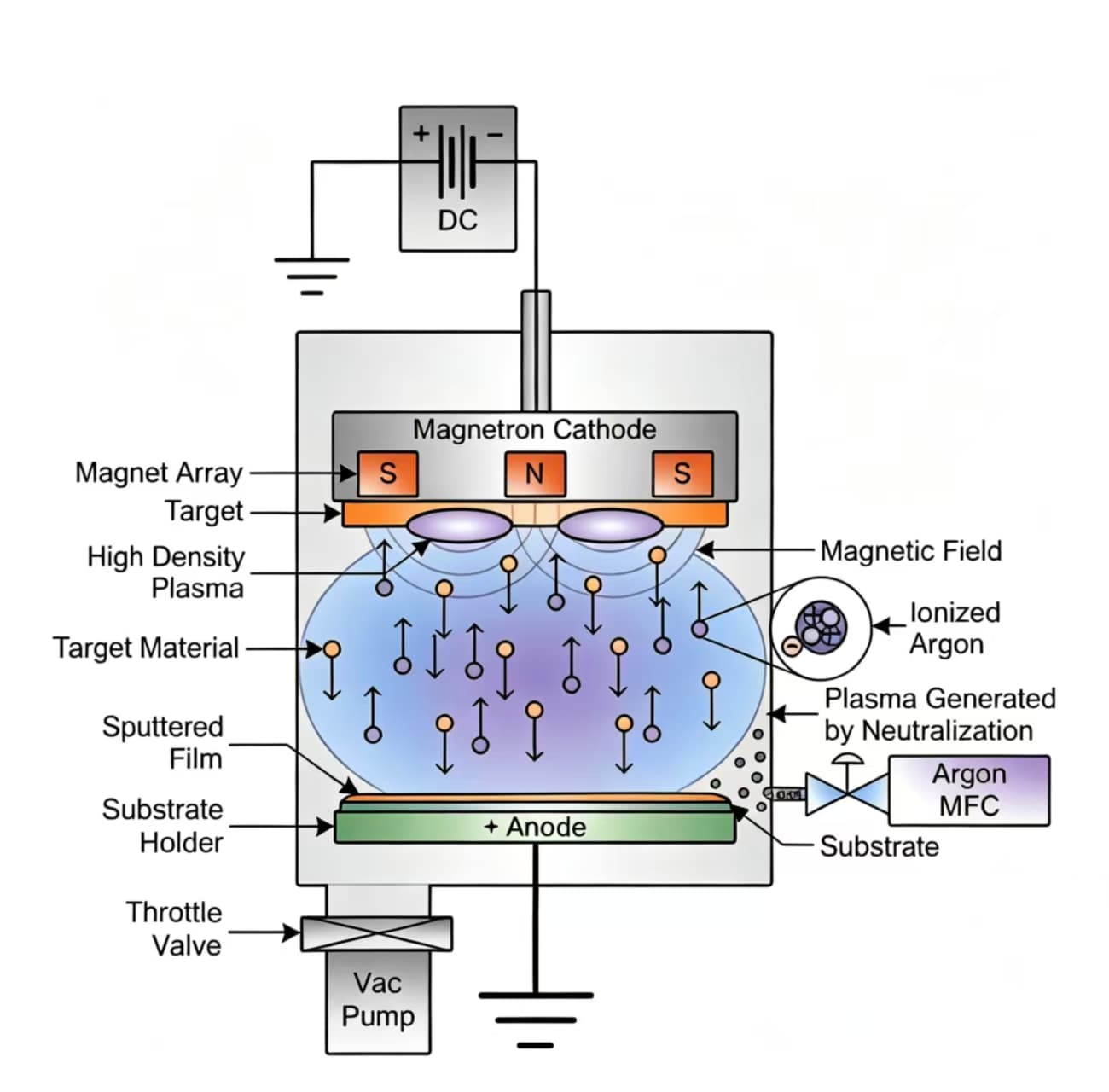
A controlled amount of Argon (Ar) is introduced. Argon is chosen because it is an inert noble gas that does not react with the target, while its heavy atoms provide efficient momentum during bombardment.
Step 4: Generating the Plasma
Power is applied to the cathode assembly, stripping electrons from the argon gas to form a stable plasma discharge:
Ar → Ar⁺ + e⁻
Step 5: Ion Bombardment and Sputtering
Because the target is negatively biased, positively charged argon ions Ar⁺ accelerate at high speeds to slam into the molybdenum target. This momentum transfer knocks surface atoms loose through sputtering rather than melting the entire block.
Why Target Quality Matters
High-end applications demand rigorous manufacturing standards for molybdenum targets to ensure smooth production:
-
High Purity (99.95% Mo): Minimizes trace impurities that degrade electrical or optical performance.
-
High Density: Eliminates internal pores, voids, or inclusions that cause arcing and particle generation.
-
Uniform Microstructure: Ensures a steady, predictable sputtering rate across the target surface.
Summary and Next Steps
At this stage, a crucial question naturally follows: Where do these violently ejected Mo atoms actually go once they leave the target?
Instead of vaporizing the entire block of metal all at once, these particles fly outward across the vacuum chamber to build the final film. Let’s look closer at how those atoms travel and what happens when they finally reach the substrate.
Post time:Sep-25-2020


