

When designing or maintaining a vacuum furnace, selecting the right high-temperature material is critical for performance, reliability, and operating costs. Among the refractory metals used in vacuum furnace applications, molybdenum and tungsten are the two most common choices.
Both materials offer exceptional heat resistance and mechanical strength at elevated temperatures. However, their properties, costs, and suitable applications differ significantly.
So, which material is better for vacuum furnaces: molybdenum or tungsten?
In this article, we'll compare their characteristics, advantages, limitations, and ideal applications to help engineers and purchasing professionals make the right decision.
Understanding Molybdenum and Tungsten
Molybdenum (Mo) and tungsten (W) belong to the refractory metal family, known for their extremely high melting points and excellent performance in high-temperature environments.
Key properties include:
| Property | Molybdenum | Tungsten |
|---|---|---|
| Melting Point | 2623°C | 3422°C |
| Density | 10.2 g/cm³ | 19.3 g/cm³ |
| Thermal Conductivity | High | Moderate |
| Electrical Conductivity | Excellent | Excellent |
| Machinability | Good | Difficult |
| Cost | Lower | Higher |
While both materials perform well in vacuum environments, each has unique advantages depending on the furnace application.
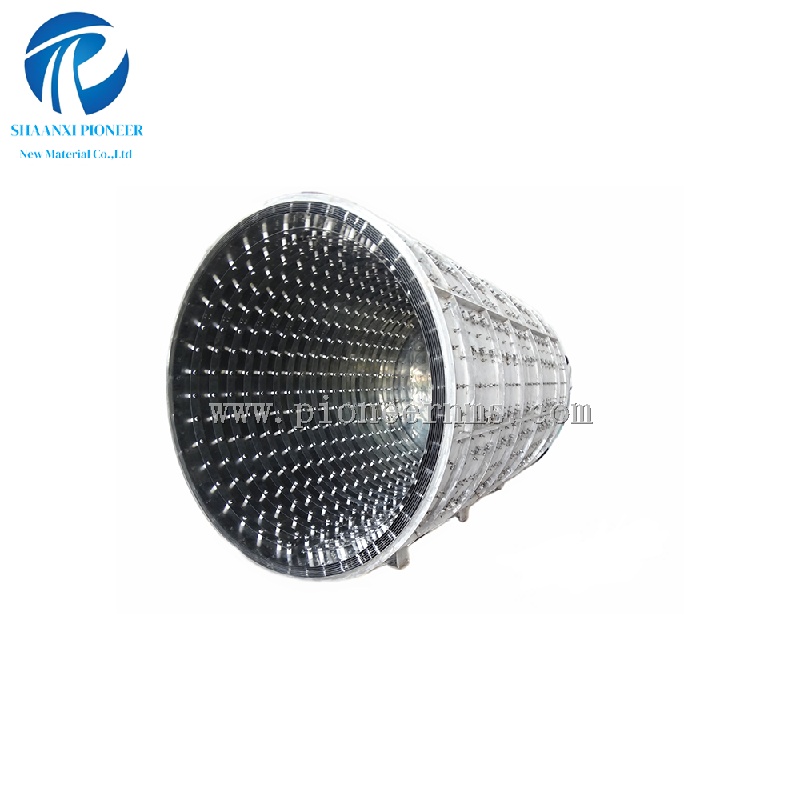
Why Molybdenum Is Widely Used in Vacuum Furnaces
Molybdenum is the most commonly used refractory metal in industrial vacuum furnaces.
Excellent High-Temperature Performance
Molybdenum maintains good mechanical strength at temperatures up to approximately 1800°C–1900°C in vacuum conditions.
This makes it suitable for:
-
Vacuum heat treatment furnaces
-
Sintering furnaces
-
Brazing furnaces
-
Powder metallurgy furnaces
Lower Material Cost
Compared with tungsten, molybdenum is significantly more economical.
For many furnace manufacturers and end users, molybdenum offers the best balance between performance and cost.
Easier Fabrication
Molybdenum can be machined, formed, welded, and fabricated more easily than tungsten.
Common vacuum furnace components made from molybdenum include:
-
Heating elements
-
Heat shields
-
Support structures
-
Threaded rods
-
Nuts and fasteners
-
Trays and fixtures
Better Availability
Molybdenum materials and fabricated parts are generally easier to source and have shorter production lead times.
When Tungsten Becomes the Better Choice
Although more expensive, tungsten offers several advantages in ultra-high-temperature applications.
Highest Melting Point of Any Metal
With a melting point of 3422°C, tungsten can withstand temperatures far beyond the operating range of most vacuum furnaces.
For applications above 2000°C, tungsten often becomes the preferred material.
Superior High-Temperature Strength
Tungsten retains its mechanical properties at temperatures where molybdenum begins to soften.
This makes it ideal for:
-
Crystal growth furnaces
-
Sapphire production furnaces
-
Semiconductor processing equipment
-
Ultra-high-temperature sintering furnaces
Reduced Deformation
At extremely high temperatures, tungsten is generally more resistant to creep and deformation than molybdenum.
Comparing Molybdenum and Tungsten in Vacuum Furnace Applications
Heating Elements
For most industrial vacuum furnaces operating below 1800°C, molybdenum heating elements are the preferred choice due to their lower cost and excellent performance.
Tungsten heating elements are typically used when furnace temperatures exceed 2000°C.
Heat Shields
Molybdenum heat shields are widely used because they provide excellent thermal reflection while remaining cost-effective.
Tungsten shields are generally reserved for specialized high-temperature systems.
Structural Components
For threaded rods, support frames, and fasteners, molybdenum is often preferred due to easier machining and lower material costs.
Ultra-High-Temperature Processes
When temperatures approach or exceed 2200°C, tungsten usually becomes the better long-term solution.
Cost Considerations
Material selection should not be based solely on temperature performance.
In many cases, tungsten may cost significantly more than molybdenum due to:
-
Higher raw material costs
-
More difficult machining
-
Increased fabrication complexity
For standard vacuum furnace operations below 1800°C, using tungsten may increase costs without providing significant performance benefits.
Which Material Should You Choose?
The best choice depends on your operating temperature and application requirements.
Choose molybdenum if:
-
Operating temperatures are below 1800°C
-
Cost efficiency is important
-
Components require machining or customization
-
Standard vacuum furnace applications are involved
Choose tungsten if:
-
Operating temperatures exceed 2000°C
-
Maximum high-temperature strength is required
-
Ultra-high-temperature processes are involved
-
Long-term dimensional stability is critical
Conclusion
Both molybdenum and tungsten are excellent materials for vacuum furnace applications, but neither is universally superior.
For the majority of industrial vacuum furnaces, molybdenum provides the best combination of performance, manufacturability, and cost-effectiveness. This is why molybdenum remains the preferred material for heating elements, heat shields, fasteners, and structural furnace components worldwide.
However, for ultra-high-temperature applications above 2000°C, tungsten offers unmatched thermal stability and mechanical strength, making it the better choice despite its higher cost.
When selecting materials for your vacuum furnace, working with an experienced refractory metal manufacturer can help ensure the best balance of performance, service life, and overall operating costs.
Post time:Sep-25-2020


